How to Become a Certified Personal Trainer in India: Step-by-Step Career Guide for 2026
Thinking about a career in fitness? Learn how to become a certified personal trainer in India, including eligibility, exercise science, practical skills, certification, career pathways and professional development.
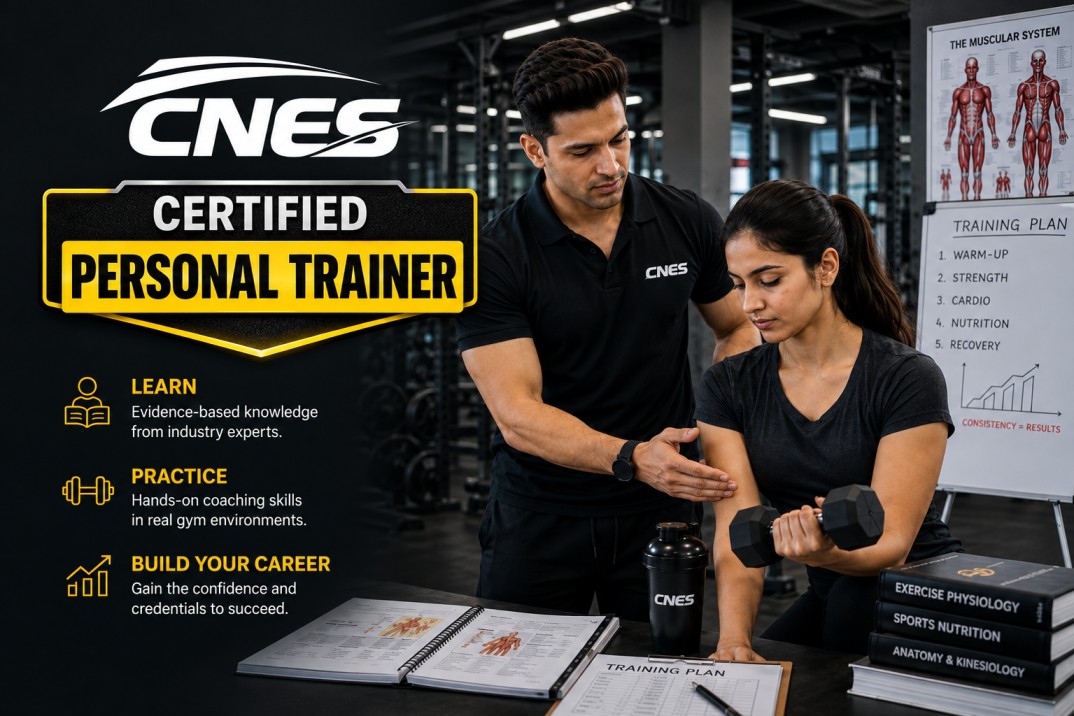
If you are wondering how to become a certified personal trainer in India, the broad pathway is straightforward: first understand what the profession involves, check the eligibility requirements of the certification pathways you are considering, build a foundation in exercise science and safe training principles, choose a credible learning programme, develop practical coaching skills, complete the required assessments and continue gaining experience after certification.
The details, however, matter. Becoming a capable personal trainer is not simply about being passionate about fitness or knowing how to perform exercises yourself. Working with clients requires knowledge, judgement, communication and the ability to adapt training to different goals and starting points.
This step-by-step career guide explains how to start a career in fitness, what you may need to learn before working with clients and how to evaluate a personal trainer certification in India without treating one route as universally right for everyone.
Quick Career Roadmap
What Does a Personal Trainer Actually Do?
Client Consultation
Understanding a client's goals, training history, lifestyle factors and relevant information before planning an appropriate fitness approach.
Fitness Assessment
Using suitable assessment methods to understand a client's starting point and establish a basis for monitoring progress.
Exercise Programming
Planning structured sessions or programmes around the individual's goals, current ability, available time and progression needs.
Safe Exercise Instruction
Explaining, demonstrating and observing exercises while applying appropriate health, safety and professional considerations.
Monitoring Progress
Reviewing outcomes over time and adjusting training variables where appropriate.
Client Motivation
Supporting consistency through communication, realistic goal setting, encouragement and behaviour-focused coaching approaches.
Professional Development
Keeping knowledge and skills current and recognising the limits of one's competence.
Is a Degree Required to Become a Personal Trainer in India?
A university degree is not automatically the only route into a personal training career. Different employers, course providers and career pathways may have different expectations, and course eligibility can vary considerably.
It is therefore useful to distinguish between two questions: what education a particular certification programme requires for admission, and what a particular employer or professional opportunity may prefer or require.
Some people may enter the field after school through an appropriate education and certification pathway, while others may come from graduate, sports, health or unrelated professional backgrounds.
Before enrolling, always check the official eligibility criteria for the exact course you are considering. If you plan to work in a specific organisation, city or country, investigate the expectations relevant to that opportunity.
Important: This article is a career guide, not legal advice, and it does not assume that one identical qualification is mandatory in every situation.
From Fitness Enthusiast to Certified Personal Trainer: A Practical Career Roadmap
| Stage | Your Focus | Practical Outcome |
|---|---|---|
| 1. Explore the profession | Understand responsibilities, career environments and professional expectations | A clearer picture of whether the role suits you |
| 2. Check eligibility | Review your education and the entry requirements of relevant courses | A realistic shortlist of suitable pathways |
| 3. Build foundations | Study anatomy, physiology and exercise principles | Stronger understanding before advanced application |
| 4. Choose certification | Compare curriculum, practical learning, assessment and recognition | A more informed course decision |
| 5. Develop practical skills | Practise coaching, observation, communication and programme design | Greater readiness to apply knowledge |
| 6. Complete assessments | Demonstrate the knowledge and skills required by the programme | Progress toward certification |
| 7. Gain experience | Work, observe, assist or develop experience within appropriate settings | Improved confidence and professional judgement |
| 8. Build client skills | Improve communication, organisation and client management | Better long-term professional effectiveness |
| 9. Keep learning | Continue professional development and update relevant knowledge | A sustainable learning pathway |
Step-by-Step: How to Become a Personal Trainer in India
Step 1: Understand the Profession
Before looking for a personal trainer course after 12th or comparing certification providers, understand the work itself.
Personal training involves responsibility. You may be expected to plan sessions, communicate with people who have different goals and confidence levels, observe exercise performance and make decisions within the boundaries of your education and competence.
Speak with practising professionals where possible, observe the work done in gyms and studios, and ask whether you enjoy teaching, communicating and learning continuously—not only training yourself.
Step 2: Assess Your Current Education and Eligibility
Understand where you are starting from. Are you a student after 12th, a graduate, an experienced gym trainer without formal certification or a working professional considering a career change?
Create a shortlist of programmes and check each provider's official eligibility criteria.
Look for:
- Minimum age requirements
- Educational requirements
- Prerequisites
- Language requirements
- Other conditions relevant to admission
Step 3: Learn Exercise Science Fundamentals
A serious career in personal training should be built on more than memorised workouts.
Develop a foundation in anatomy, physiology, biomechanics, training principles, adaptation and recovery.
These foundations support better exercise choices and help you understand why a programme may need to change from one person to another.
Step 4: Choose a Credible Certification Pathway
Review the syllabus rather than choosing only on the basis of price, speed or advertising.
Compare:
- Educational depth
- Practical-learning opportunities
- Assessment
- Faculty information
- Eligibility
- Accreditation or recognition claims
Verify important claims through relevant official organisations.
For a detailed comparison framework, read “Best Personal Trainer Course in India: How to Choose the Right Certification.”
Step 5: Gain Practical Skills
Practical competence is a major part of professional development.
Knowing the name of a muscle or reading about exercise technique is different from observing a person, communicating a clear instruction and adapting your coaching approach.
Ask how practical skills such as the following are taught and assessed:
- Exercise demonstration
- Movement observation
- Assessment practice
- Programme planning
- Feedback
Step 6: Pass the Required Assessments
Every education pathway may use its own assessment structure, such as written assessments, assignments, practical demonstrations or case-based work.
Ask what the assessment is designed to evaluate and what students must demonstrate to complete the programme.
Step 7: Build Professional Experience
Certification is an important milestone, but professional growth continues after it.
Depending on your opportunities, experience may develop through suitable entry-level roles, mentoring, observation, assisting experienced professionals or working with clients within your training and professional scope.
The goal is to develop judgement gradually.
Step 8: Develop Communication and Client-Management Skills
Clients need clear explanations, realistic goal setting, consistent communication and an organised experience.
Develop skills in:
- Listening
- Asking useful questions
- Explaining concepts simply
- Setting expectations
- Documenting progress
- Managing time professionally
Step 9: Continue Professional Development
Fitness education should not stop at the first certificate.
As you gain experience, identify areas where further education is useful. Choose future learning based on your goals and the populations you work with rather than collecting certificates without a clear purpose.
What Should You Learn Before Working With Clients?
Before you begin working independently with clients, your education should help you understand the core areas relevant to responsible personal training.
The depth required depends on your pathway and role, but the following topics are important to evaluate.
Anatomy
Major muscles, joints and basic body structures relevant to movement and exercise.
Physiology
How body systems respond and adapt to physical activity and training.
Biomechanics
Basic movement principles that can support exercise observation and technique understanding.
Fitness Assessment
The purpose and appropriate use of relevant assessments for understanding a starting point and monitoring progress.
Exercise Programming
How to structure training around goals, current ability, progression and individual differences.
Strength & Cardiovascular Training Principles
Core variables, adaptation principles and methods used in structured training.
Flexibility & Mobility
How these concepts relate to movement and exercise planning without treating them as interchangeable terms.
Basic Nutrition Boundaries
Understanding the limits of your role and when nutrition-related questions may require a suitably qualified professional.
Health & Safety
Safe working practices, appropriate screening and recognising when an issue may fall outside your competence.
Behaviour Change
How habits, motivation, realistic goals and adherence can affect long-term progress.
Professional Ethics
Honest communication, appropriate boundaries, confidentiality expectations and responsible representation of your competence.
How to Choose a Personal Trainer Certification in India
Avoid making the decision on one factor alone.
A low fee does not automatically mean poor quality, just as a high fee does not automatically mean better education. A fast course is not necessarily unsuitable, but you should understand what is included and how competence is developed.
Questions to Ask Before Enrolling
- Can I see the complete curriculum?
- Does the course teach anatomy, physiology and exercise science at an appropriate level?
- How are client assessment and exercise programming covered?
- How are practical skills developed?
- What assessments must students complete?
- Who are the educators and what information is published about their expertise?
- What are the official eligibility requirements?
- What exactly does any accreditation or recognition claim apply to?
- What is included in the total course cost?
- Does the learning format suit my circumstances and career goals?
For a deeper buyer's guide, read “Best Personal Trainer Course in India: How to Choose the Right Certification.”
Essential Skills of Successful Personal Trainers
Technical Understanding
A sound grasp of relevant exercise and training principles.
Communication
The ability to explain instructions and concepts in language a client can understand.
Observation
The ability to pay attention to exercise performance, behaviour and changes over time.
Empathy & Listening
Understanding that different clients may have different motivations, confidence levels and concerns.
Programme Planning
Organising training in a structured and adaptable way.
Professional Judgement
Recognising the limits of your competence and avoiding claims or actions outside your role.
Organisation
Managing appointments, records, plans and follow-up consistently.
Adaptability
Adjusting communication and training approaches when circumstances change.
Motivational Skills
Helping clients maintain realistic, sustainable engagement rather than relying on hype.
Commitment to Learning
Continuing to improve knowledge and skills over the course of your career.
Where Can Certified Personal Trainers Work?
A fitness trainer career in India can develop across different environments.
Opportunities depend on qualifications, experience, location, employer requirements, professional network and the type of services you want to provide.
- Commercial gyms and health clubs
- Boutique fitness studios
- Independent personal training settings
- Corporate or workplace wellness environments
- Sports and fitness organisations where the role matches your education and experience
- Online or remote coaching environments where appropriate to your qualifications and service model
- Fitness education or support roles after gaining suitable additional experience or qualifications
These examples describe broad career environments, not guaranteed employment outcomes. Requirements can differ significantly between employers and roles.
Common Mistakes Beginners Make
Compare total value, curriculum and practical development rather than price alone.
Completion speed is only one consideration; understand what you are expected to learn and demonstrate.
Training yourself and assessing, communicating with and programming for another person are different skills.
Ask exactly how coaching skills are developed, practised and assessed.
Verify what organisation is involved and what the claim actually applies to.
Understand professional boundaries and seek appropriate guidance or referral where a client's needs fall outside your role.
Experience and continuing education are part of long-term development.
Technical knowledge matters, but client trust and clarity also depend on how you communicate and manage the relationship.
How Long Does It Take to Become a Personal Trainer?
There is no single universal duration.
The time it takes depends on the certification pathway, delivery format, curriculum depth, practical-learning requirements, assessment structure and the amount of time you can realistically dedicate to study.
Some programmes may be structured for faster completion, while others involve a longer or more extensive learning process. Online, offline and hybrid formats can also affect the pace at which a student progresses.
Rather than choosing only by the shortest advertised duration, ask how much time is expected for learning, practical development, assessment preparation and completion.
The better question is not simply “How quickly can I get certified?”
Ask: “Will I be prepared to begin developing professionally after I complete this pathway?”
Before You Enrol in Any Personal Trainer Course
-
1. Review the complete syllabus
Make sure you know what you will actually study. -
2. Confirm eligibility
Check age, education and any prerequisite requirements. -
3. Understand the learning format
Know whether theory and practical elements are online, offline or hybrid. -
4. Ask how practical skills are taught
Do not assume “practical” means the same thing across providers. -
5. Understand the assessment process
Find out how knowledge and applied skills are evaluated. -
6. Verify recognition claims independently
Check official directories or organisations where relevant. -
7. Review faculty information
Look for transparent information about relevant qualifications and experience. -
8. Compare the full cost
Check what is included and whether there are additional assessment, material or other fees. -
9. Understand what the certificate represents
Distinguish course completion, accreditation, professional registration and employment opportunities. -
10. Check whether the pathway fits your career goal
Choose based on the work you want to develop toward, not only the popularity of the course.
How CNES Can Fit Into a Professional Learning Pathway
Once you have understood the profession and identified what you need from a course, you can evaluate individual providers using the same criteria.
CNES can be considered as one possible learning pathway by reviewing the specific Certified Personal Trainer programme, its published curriculum, eligibility requirements, learning structure, practical components and assessment process.
Prospective students should also review current information about faculty and any accreditation or recognition claims directly from the relevant official sources.
This is important because provider status, course structures and external recognition frameworks can change over time.
The aim is not to assume that one provider is automatically the best for every learner.
Instead, compare the CNES pathway against your own goals using the same framework you would apply to any credible personal trainer course: what you will learn, how you will practise, how you will be assessed and how the programme fits your intended professional direction.
If the structure matches your needs, the CNES Certified Personal Trainer course can be a relevant programme to explore as part of your career decision process.
Final Thoughts: Build a Career, Not Just a Certificate Collection
If you want to know how to become a personal trainer in India, start by understanding that certification is one part of a larger professional journey.
Your knowledge, practical skills, communication, experience and willingness to continue learning all matter.
A thoughtful pathway is usually better than chasing the quickest certificate or the loudest marketing claim.
- Learn the fundamentals.
- Compare programmes carefully.
- Develop practical competence.
- Build experience gradually.
- Stay aware of your professional boundaries.
- Keep improving.
For readers who are now ready to compare course options, the next useful step is to read “Best Personal Trainer Course in India: How to Choose the Right Certification.”
You can also explore the CNES Certified Personal Trainer course and evaluate its current learning structure, eligibility and certification pathway against your own career goals.
Frequently Asked Questions
Some personal trainer education pathways may be available to students after 12th, depending on the provider's official eligibility criteria. Check the exact requirements of the programme you want to join rather than assuming all courses have the same entry conditions.
A degree is not automatically the only route into personal training. Course providers and employers may have different expectations, so check the certification pathway and the career environment you are targeting.
Yes, some education pathways are designed for beginners. Look for structured learning covering exercise science, practical coaching, assessment, programme design, health and safety and professional boundaries.
Compare curriculum, practical learning, assessment, eligibility, faculty, total cost and independently verifiable accreditation or recognition claims.
The related course-comparison article provides a detailed framework.
Practical learning can be highly valuable because personal training requires applying knowledge when communicating with and coaching real people. Ask exactly how practical skills are developed and assessed.
Some programmes use online or hybrid learning formats. Suitability depends on how theory is taught, how practical competence is developed, how assessments work and whether the structure fits your goals.
Important skills include technical understanding, communication, observation, empathy, programme planning, professional judgement, organisation, adaptability and commitment to continued learning.
Ready to Start Your Personal Trainer Career?
If you are exploring how to become a certified personal trainer in India, start by understanding the profession, reviewing your eligibility and comparing certification pathways based on curriculum, practical learning, assessment, faculty, recognition and your long-term career goals.
Once you understand what you need from a programme, you can explore the CNES Certified Personal Trainer course and evaluate whether its current learning structure and certification pathway align with your professional direction.
Note: Course eligibility, course structures, faculty details and accreditation or recognition information can change over time. Verify current programme details and relevant official information before enrolling.
Related Articles
Certified Fitness Trainer Course in India: Eligibility, Skills, Career Scope & How to Choose the Right Course
Learn about certified fitness trainer courses in India, including eligibility, curriculum, practical skills, career scope and how to choose the right programme.
Personal Trainer Course Fees in India: Complete 2026 Cost & Comparison Guide
Compare personal trainer course fees in India, what different programmes include, why prices vary and the costs to consider before choosing a certification.
Why a Gym Franchise Alone Isn't Enough: How Fitness Education Can Build a Stronger Gym Business in India
Explore how fitness education, professional certifications and trainer development can complement a gym business and create additional opportunities beyond memberships.